
100-Hour Yoga Teacher Training (RYS 200)

- Rishikesh
- 4 Weeks
- USD 1,050 (Shared) - USD 1,200 (Single)
- 3 Organic Vegetable Meals
- Sightseeing / Excursions on Sunday
- Yoga Mat, Books, Neti pot, Bag and more
100 Hour Yoga Teacher Training in Rishikesh, India — Anadi Yoga Centre
There is a special kind of clarity that comes when you learn yoga in a place where yoga is part of everyday life—not a weekend hobby, not a workout trend, but a living tradition. Anadi Yoga Centre’s 100 Hour Yoga Teacher Training in Rishikesh is created for students who want to begin from the roots: understanding the body, learning the breath, exploring the mind, and laying the solid groundwork for a deeper journey.
This training is beginner-friendly, yet intensive. You don’t need to arrive with perfect flexibility or years of practice behind you. What you do need is sincerity—curiosity, discipline, and the willingness to show up each day. Over the span of two immersive weeks, you will study the essential foundations of the system: traditional Hatha, introductory Vinyasa Flow, the basics of meditation and its inner layers, core yoga philosophy based on classical texts, functional anatomy, breath science through pranayama, and the fundamental skills needed to build a self-practice or begin your teaching path.
Rishikesh supports this journey in its own quiet way. The river’s presence, the mountain air, the rhythm of early mornings, and the simple focus of an ashram-like routine naturally invite you to slow down. In that slowing down, many students find the real beginning: not just learning postures, but learning how to listen—how to move with awareness, how to breathe with intention, and how to carry yoga into daily life.
A Training That Builds Real Foundations
The 100-hour teacher training is often the “first chapter” of a lifelong journey, but at Anadi Yoga Centre we treat it as a vital starting point. It provides a stable introduction—whether you intend to return later to complete the full certification, wish to deepen your personal practice at home, or simply want to understand the “why” behind what you do on the mat without the pressure of a longer commitment.
This program is designed to help you:
- Build a safe and sustainable asana practice (without forcing or rushing the body)
- Understand alignment principles that protect joints and support long-term progress
- Learn how breath influences energy, mood, and focus through pranayama
- Experience meditation beyond “trying to stop thoughts,” exploring layers of awareness
- Study the philosophy of yoga in a way that feels practical, relevant, and lived
- Gain a working knowledge of anatomy and movement for smarter practice and teaching
- Develop core teaching skills: cueing, sequencing, observation, class structure, and confidence
- Step into a consistent routine that supports a yogic lifestyle, not just yoga classes
This is yoga taught with patience and respect for the individual. You will be guided progressively—from foundational concepts to clearer understanding—so the short-term immersion feels supportive rather than overwhelming.

Course Summary at Anadi Yoga Centre
Course Summary of the 100 Hour Yoga Teacher Training in Rishikesh
A yoga teacher training is not only about what you study—it’s also about the rhythm of the days, the environment, and the inner space you create. Below is a clear overview of how the course experience typically unfolds at Anadi Yoga Centre.
Your journey begins the moment you arrive in the holy city of Rishikesh. Day 1 is dedicated to landing softly. You will check into your accommodation at the Anadi Yoga Centre, unpack, and take a moment to breathe in the mountain air. This is a day to recover from travel, explore the immediate surroundings of the ashram, meet the staff, and enjoy your first wholesome ayurvedic dinner with your fellow students. There are no classes today—just settling in.
The course officially commences with a traditional Fire Ceremony (Hawan), a sacred ritual to purify the atmosphere and set a positive intention for the journey ahead. following the ceremony, we hold an Orientation session where you will receive your course manual, yoga kit, and a detailed explanation of the schedule and code of conduct. This day is about building the "sangha" (community) and preparing your mind for the immersion.
Now, we step into the rhythm. Your days will start early (usually around 6:00 AM) with mantra chanting and Pranayama, followed by a traditional Hatha Yoga class. After a nutritious breakfast, the day flows into theory modules: Yoga Philosophy, Anatomy, and Art of Teaching. After lunch and a brief rest, you return to the mat for an afternoon session—often focusing on Vinyasa flow, alignment adjustment, or teaching methodology—ending the day with evening meditation and dinner. This routine is designed to detoxify the body and discipline the mind.
In a 100-hour immersion (spanning two weeks), the Sunday in the middle is your vital pause button. There are no scheduled classes. You can use this day to rest your muscles, study, or explore Rishikesh. Many students choose to visit the Beatles Ashram, hike to nearby waterfalls, raft on the Ganga, or attend the famous Ganga Aarti at Parmarth Niketan. It is a day to recharge so you can enter the second week with fresh energy.
Unlike the 200-hour course where you teach a full class, the 100-hour practicum is about breaking the ice. In this second week, you will start "peer teaching" in small, manageable segments. You might guide a small group through Surya Namaskar (Sun Salutations) or teach a single pose with correct alignment cues. The goal here isn't perfection; it is to help you find your "teacher's voice," overcome the fear of public speaking, and gain the confidence to lead others safely.
On the final day, we close the circle just as we opened it—with gratitude. The Closing Ceremony is a celebration of your discipline and growth. You will receive your 100-Hour Yoga Teacher Training Certificate, take group photos, and share a farewell meal. You leave not just with a piece of paper, but with a solid foundation of knowledge, a deeper personal practice, and a global family of yogis.
Are You Ready to Transform?
Don’t just learn yoga—experience it. Join the Anadi Yoga Centre family and discover the teacher within you.
What You Receive in This Course
Why Choose Anadi Yoga Centre for Your 100 Hour Yoga Teacher Training in Rishikesh?
There are many schools in Rishikesh. So what is the point of choosing one over another? For most students, the deciding factor is not a fancy brochure—it is the quality of teaching, the sincerity of the environment, and how well the training supports your growth as a beginner.
At Anadi Yoga Centre, this course is built around three pillars:
We do not assume you are already an expert. In fact, we love teaching absolute beginners. Our teachers break down every asana from the ground up—showing you exactly where to place your feet, how to align your spine, and how to use props to support your body. The 100-hour course is designed to be a "zero-pressure" zone where you can ask questions, make mistakes, and learn the correct techniques without feeling rushed or judged.
A true yoga education goes beyond just sweating on a mat. We ensure you get a complete picture of the tradition. While you will strengthen your body with daily Hatha and Vinyasa classes, you will also feed your mind with accessible lessons on Yoga Philosophy, Anatomy, and Pranayama. We bridge the gap between ancient texts and modern life, helping you understand why we practice, not just how.
You can learn poses from a book, but you can only learn the lifestyle by living it. For two weeks, you will be immersed in an ashram environment that naturally supports your well-being. From waking up early to eating nutritious Sattvic (vegetarian) meals and disconnecting from the chaos of the outside world, you will experience how a disciplined routine brings mental clarity. This "learning through living" is often what students value most after they leave.
200 Hour Yoga TTC Date & Fee – 2026
3 Dec- 24 Dec 2025
Seats: 10
3 jan- 24 Jan 2026
Seats: 10
3 Feb- 24 Feb 2026
Seats: 10
3 Mar- 24 Mar 2026
Seats: 10
3 Apr- 24 Apr 2026
Seats: 10
3 May- 24 May 2026
Seats: 10
3 Jun- 24 Jun 2026
Seats: 10
3 Jul- 24 Jul 2026
Seats: 10
3 Aug- 24 Aug 2026
Seats: 10
3 Sep- 24 Sep 2026
Seats: 10
3 Oct- 24 Oct 2026
Seats: 10
3 Nov- 24 Nov 2026
Seats: 10
Need custom dates? Feel free to WhatsApp us at +91 99978 90822 — we’ll be happy to help!
Detail Course
Become Certified Yoga Instructor from Anadi Yoga Centre - RYS 100
Yoga Style:
Hatha & Vinyasa Flow
Certification:
RYT 100 (Yoga Alliance)
Course Type:
Residential & Intensive
Level:
Beginners & Intermediate
Course Inclusions
- Rishikesh
- 4 Weeks
- USD 1,050 (Shared) - USD 1,200 (Single)
- 3 Organic Vegetable Meals
- Sightseeing / Excursions on Sunday
- Yoga Mat, Books, Neti pot, Bag and more
Course Timeline – 100 Hour Yoga TTC

A quick view of key milestones from arrival to departure.
Check In
Opening Ceremony
Certification
Check Out
What You Should Know Before Joining This Course
Skill Level for the 100 Hour Yoga Teacher Training at Anadi Yoga Centre
This course welcomes a wide range of students, specifically:
- Complete beginners who want a safe and comprehensive introduction
- Time-constrained students who cannot commit to a full month away
- Aspiring teachers who want to test the waters before the full 200-hour certification
- Casual practitioners who want to correct their alignment and understand the basics
- Travelers in Rishikesh looking for a meaningful, structured immersion
Yoga is not a competition. The goal is steadiness.
You do not need to be extremely flexible. You do not need to already know advanced poses. You do not need to be “spiritual” in any particular way.
What helps most is:
- Willingness to learn fresh concepts
- Openness to feedback and correction
- Respect for the process and the tradition
- Commitment to the two-week schedule
Personalized Support & Modifications
Every body is different. A good training makes room for that. Throughout the course, you will learn how to:
- Modify postures for stiffness or injury history
- Use props (blocks, straps) to find stability before flexibility
- Progress gradually without pushing the nervous system into stress
- Build strength, stability, and confidence step by step
Yoga is not a competition. The goal is steadiness.
Who This Course is Perfect For
- Beginners who want to build a real foundation
- Students who want discipline and routine
- Practitioners who want to understand alignment and safe movement
- People who want to study philosophy and meditation in an accessible way
- Aspiring teachers ready to start teaching with clarity
Course Fees: What’s Typically Included / Not Included
Since different batches and packages can vary, below is a standard-style breakdown many trainings follow (you can adjust this section to match your exact offering):
- Accommodation for the course duration (shared/private depending on package)
- Daily yoga training sessions and study materials (as provided)
- Meals on training days (often vegetarian)
- Basic course manual or learning resources
- Teaching practicum and assessments
- Local support during training
- International flights and travel to Rishikesh
- Visa fees and travel insurance
- Airport pickup unless specifically mentioned as included
- Private room upgrades (if applicable)
- Personal expenses, café visits, shopping, etc.
- Additional therapies or private sessions (if offered separately)
Styles of Yoga You’ll Explore During the Training
Style of Yoga in the 200 Hour Yoga Teacher Training (Anadi Yoga Centre)
Yoga is a wide field. In this training, you learn styles that support both strength and softness, both discipline and inner space.
This is the backbone of the course. Hatha Yoga is about balance—balancing the "Ha" (Sun/active) and "Tha" (Moon/receptive) energies. In these sessions, we focus on holding postures for longer periods to understand proper alignment, engage the right muscle groups, and build endurance. You will learn the classic postures (asanas) not just by shape, but by their mechanics and benefits. It is the perfect starting point for beginners to develop stability.
Once you understand the stability of Hatha, we introduce the fluidity of Vinyasa. "Vinyasa" means to place in a special way. Here, you will learn to link breath with movement, flowing from one pose to the next in a dynamic sequence. We focus heavily on Surya Namaskar (Sun Salutations) and the transitions between poses, teaching you how to move with grace and how to prevent injury when the pace picks up.
Breath is the bridge between the body and the mind. In the 100-hour course, we strip away the confusion around breathing techniques and teach the essentials. You will practice fundamental techniques like Nadi Shodhana (Alternate Nostril Breathing) to balance the nervous system, Kapalbhati (Shining Skull) for cleansing, and Ujjayi (Victorious Breath) to build internal heat. You will learn how to use breath to calm anxiety or boost energy instantly.
Meditation is not about "stopping your thoughts"—it is about changing your relationship with them. We explore accessible techniques including Mindfulness, Breath Awareness, and Mantra Chanting. These sessions are designed to help you sit comfortably, reduce mental clutter, and find a few moments of genuine silence. It is a practical toolkit for modern mental health.
Rest is just as important as effort. To balance the physical intensity of the training, we incorporate restorative elements like Yoga Nidra (Yogic Sleep). This guided relaxation technique allows the body to heal and the mind to reset. You will learn how to relax consciously, releasing deep-seated tension in the muscles and nervous system that sleep alone often doesn't reach.
Accommodation
Students typically stay close to the training space so that daily routine remains simple and steady. A supportive stay includes:
- Clean rooms with comfortable bedding
- Quiet areas for rest and recovery
- Spaces for self-study and reflection
- A respectful shared environment that supports early mornings and discipline
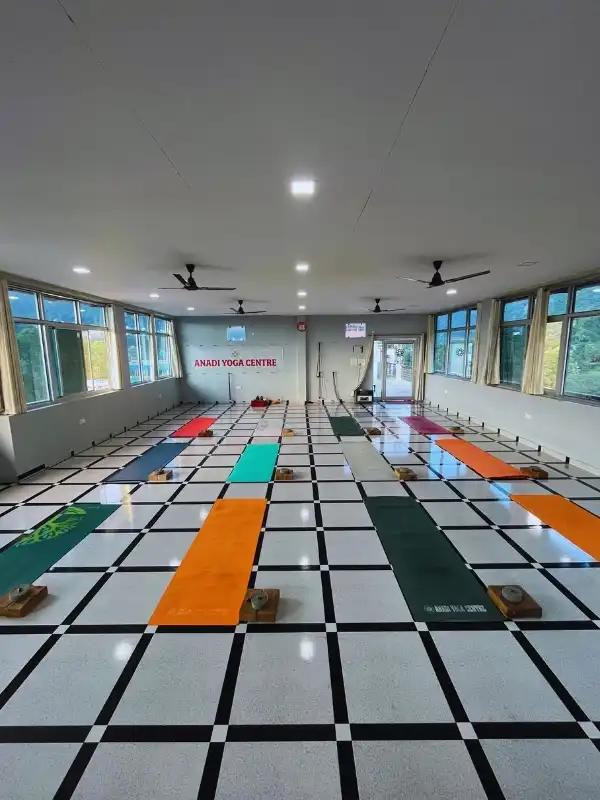
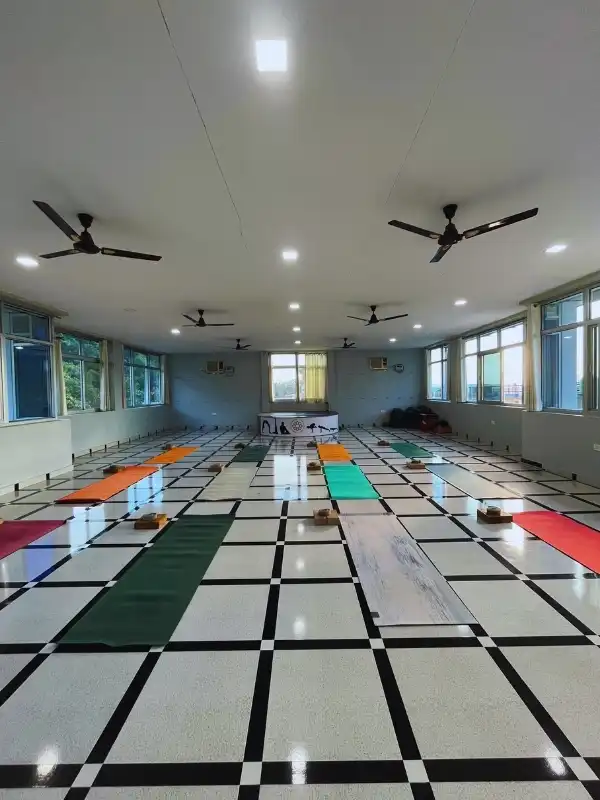
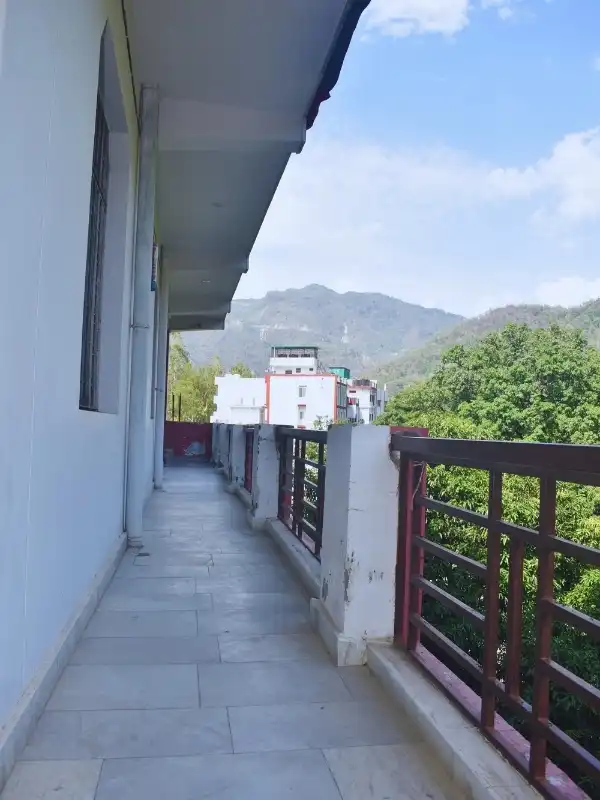
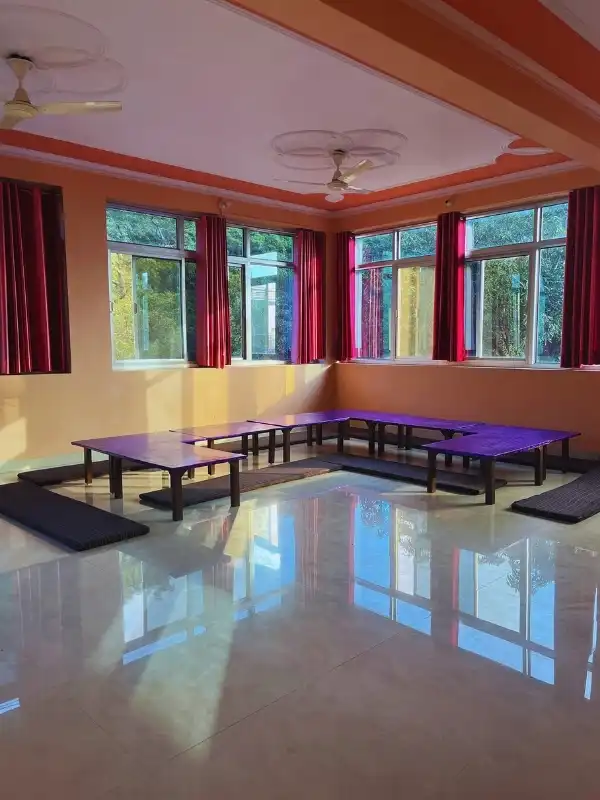
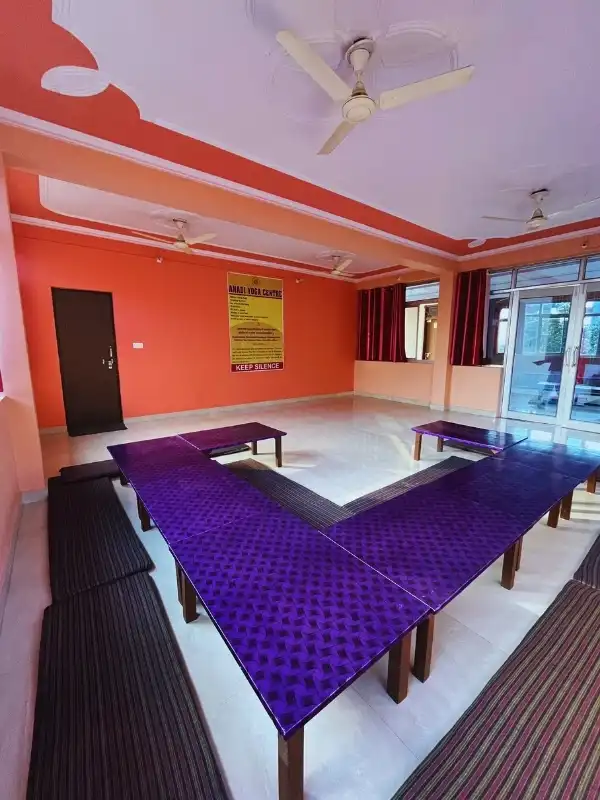
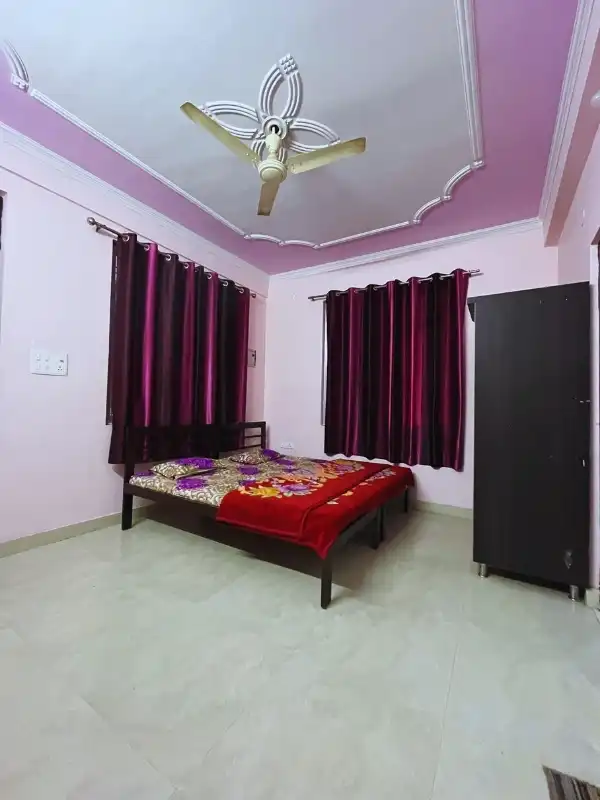

Room options (such as shared or private) depend on availability and your chosen package. If you have preferences, it’s best to communicate them early.
Food & Yogic Nutrition
Yoga is not only what you practice—it’s also what you consume. During teacher training, food is treated as part of sadhana (practice). The training atmosphere supports:
- Simple, nourishing meals designed for yogic routine
- Vegetarian-friendly options aligned with traditional yogic principles
- Hydration practices and mindful eating habits









Many schools in Rishikesh follow a sattvic-inspired approach—meals that are lighter, cleaner, and supportive for breathwork and meditation. If you have dietary needs (vegan, gluten sensitivity, allergies), inform the centre in advance so practical options can be discussed realistically.
Sundays are often left flexible so students can explore local cafés or enjoy their own rhythm, depending on the program structure.
Code of Conduct & Learning Environment
A yoga teacher training is powerful because it creates a container—an environment where your mind and body can focus. At Anadi Yoga Centre, students are expected to maintain conduct that supports the learning of everyone.
Typical guidelines include:
- Punctuality and respect for class times
- Full participation in mandatory sessions (unless unwell)
- Respectful behavior with teachers and peers
- Appropriate attire for practice and community spaces
- Avoiding alcohol, smoking, and intoxication during the course
- Maintaining cleanliness and a calm atmosphere in shared spaces
- Limiting distractions that interfere with training (late nights, excessive noise, etc.)
Discipline is not meant to feel harsh. It is meant to protect your time and your growth. When you follow a steady routine, yoga becomes easier to absorb—experientially, not just intellectually.
Evaluation, Completion & Certification
A training is meaningful when learning is integrated—not only attended. For successful completion, assessment often includes:
- Attendance requirements (commonly a minimum percentage)
- Written assignments or reflections (philosophy, teaching points, self-study)
- Practical evaluation (teaching practice, cueing, sequencing)
- Ongoing participation and professionalism in class
Upon completion, students receive a course completion certificate from Anadi Yoga Centre. If you require a certificate aligned with a specific international registration body (for example, Yoga Alliance or another organization), it’s best to confirm the current accreditation status directly with the centre before enrolling, because such statuses can change over time and may involve additional registration steps.
Book Your Place & Begin Your Divine Journey
What You Gain After Completing the 100 Hour Yoga Teacher Training
Many people join a 100-hour course thinking primarily about a certificate. They leave realizing the certificate is only one part of what happened.
Here is what students most commonly take away:
You begin to understand yoga as a complete path—how postures support energy, how breath influences the mind, and how philosophy guides daily life.
When you live a yogic routine for four weeks, you naturally become more consistent, focused, and self-aware. You notice your habits. You see what distracts you. You discover what strengthens you.
Through daily practice, you learn how to read your body more accurately:
when to move deeper
when to stabilize
when to rest
how breath changes effort
how mind affects posture
This intelligence is one of the most valuable outcomes of training.
Teaching becomes less intimidating when you understand structure:
how to plan a class
how to build a sequence logically
how to offer modifications
how to cue safely
how to observe students and respond
You may not feel like a “master” after four weeks—and that’s normal. But you will have the tools to begin.
Yoga training often creates friendships that last. Practicing and living with like-minded people from different places can be one of the most heart-opening parts of the journey.
Course Curriculum Overview
Detailed Syllabus — 100 Hour Yoga Teacher Training (Anadi Yoga Centre)
In the 100-hour course, Hatha Yoga is our primary tool for building stability. We focus on "grounding" before "flying." You will study the classical mechanics of asanas, holding postures for longer durations to understand proper alignment and muscle engagement.
Key Focus: Sun Salutations (Traditional Surya Namaskar), Standing Poses for stability, Balancing Poses for focus, and Seated Poses for flexibility.
Goal: To develop a body that is strong enough to sit for meditation and flexible enough to flow without injury.
Here, we introduce the concept of "Flow" (Vinyasa)—linking breath with movement. While Hatha is static, Vinyasa is dynamic. You will learn the foundational sequences of Ashtanga-Vinyasa.
Key Focus: Surya Namaskar A & B, correct transitions (step-backs vs. jump-backs), and synchronizing the inhale/exhale with every motion.
Goal: To understand how to build heat (Tapas) in the body and move gracefully between postures.
We strip away the complexity and teach you the essential breathing techniques that every practitioner should know. You will learn how to control the Prana (life force) to regulate your nervous system.
Key Focus: Diaphragmatic Breathing (correcting shallow breath), Nadi Shodhana (balancing energy channels), Ujjayi (Ocean Breath), and Kapalbhati (cleansing breath).
Goal: To use the breath as a tool for calming anxiety, boosting energy, and preparing the mind for meditation.
Meditation in this course is demystified. We explore practical techniques to help you withdraw the senses (Pratyahara) and find focus (Dharana).
Key Focus: Breath Awareness (Anapana), Trataka (Candle Gazing), Mantra Meditation (Japa), and a deep introduction to Yoga Nidra (Psychic Sleep) for total relaxation.
Goal: To experience moments of genuine silence and learn how to sit comfortably without mental struggle.
We dive into the "why" of yoga without getting lost in dense academic theory. We focus on the concepts that apply directly to your life and practice.
Key Focus: Introduction to Patanjali’s Yoga Sutras, deep study of the Eight Limbs of Yoga (specifically Yamas and Niyamas—ethics and self-discipline), and the history/lineage of yoga.
Goal: To understand that yoga is a lifestyle of awareness, not just a physical exercise.
You don't need to be a doctor, but you do need to know how the body moves. We focus on "Functional Anatomy"—knowledge you can actually use on the mat.
Key Focus: The Skeletal System (major joints), The Muscular System (key groups like hamstrings and core), Spine biomechanics, and how to prevent common yoga injuries (knees, lower back, neck).
Goal: To practice safely and understand the difference between tension (which you can work through) and compression (which you must respect).
This module builds the confidence to speak in front of others. Even if you don't plan to teach professionally yet, these skills are vital for communication.
Key Focus: Voice projection, how to demonstrate a pose while explaining it, basic hands-on adjustments (safe touch), and the ethics of being a teacher.
Goal: To find your "teacher’s voice" and learn how to give clear, simple instructions.
We explore the power of sound vibration. You will learn the traditional prayers used to open and close a practice, respecting the roots of the tradition.
Key Focus: Chanting Om (A-U-M) correctly, the Opening and Closing Mantras, the Gayatri Mantra, and learning the Sanskrit names of the most common asanas.
Goal: To appreciate the vibrational aspect of yoga and use Sanskrit terms correctly in class.
Shatkarma means "Six Actions" of purification. In the 100-hour course, we introduce the most accessible and beneficial techniques for beginners.
Key Focus: Jala Neti (nasal cleansing with water/salt) to clear sinuses and improve breathing, and Kapalbhati (cleansing the frontal lobes).
Goal: To physically detoxify the body, creating a lighter vessel for asana and pranayama.
In a 100-hour course, the practicum is about breaking the ice. It is a supportive, non-judgmental space to try out your new skills.
Key Focus: Peer teaching in small groups. You might teach just one pose or a round of Sun Salutations to your classmates, receiving constructive feedback from teachers.
Goal: To overcome the fear of public speaking and realize that you can guide others.
Daily Schedule — 100 Hour Yoga Teacher Training (Anadi Yoga Centre)
The Daily Rhythm of Your 100 Hour Yoga Teacher Training in Rishikesh
Let’s be honest for a second. You know that feeling when you start a new habit? You’re on fire for about three days, feeling unstoppable, and then by day four… you fizzle out.
It happens to the best of us. But here is the thing: the problem isn’t your motivation. It’s your structure. Without a solid framework, you’re essentially flying blind. That is exactly why the daily routine at Anadi Yoga Centre isn't just a timetable—it's the backbone of your experience.
When you sign up for our 100 Hour Yoga Teacher Training in Rishikesh, you aren't just signing up for a few classes. You are stepping into a carefully calibrated ecosystem designed to keep you grounded when the intensity rises. Because let’s face it, you have half the time of a 200-hour course to absorb this knowledge. We can’t afford to leave money on the table when it comes to your time.
Why the Anadi Yoga Centre Routine Matters
This isn’t a "clock in, do a downward dog, and go home" kind of deal. It’s an immersive deep dive.
The rhythm we’ve built helps you connect the dots between what you’re doing on the mat—the breath, the alignment, the sweat—and how you actually integrate those habits into your life once you leave India. That steady beat creates a sense of safety. It allows you to focus entirely on your growth because you don’t have to worry about what comes next. We’ve done the heavy lifting of planning so you can do the heavy lifting of learning.
A Look Inside the Weekly Schedule
So, what does Monday to Saturday actually look like?
At Anadi Yoga Centre, we don't believe in rigidity for the sake of it. Instead, think of our schedule as guardrails. They keep you from veering off the cliff as you navigate the deep waters of yoga philosophy and anatomy.
Your days typically start early. There’s something magical about the morning stillness in Rishikesh that cuts through the noise of a busy mind. You will begin with practice to wake up the body, transition into technique and theory as the day unfolds, and wrap up with evening sessions designed to help you digest. And I don’t just mean your dinner—I mean processing the massive amount of information you’ve taken in.
It is a balance of discipline and breathing room. That specific combination is what makes this 100 Hour Yoga Teacher Training in Rishikesh feel not just educational, but truly transformative. You stay consistent, you avoid burnout, and you walk away with a foundation that lasts.
| 5:30 AM | Wake Up |
| 5:45–6:00 | Herbal Tea |
| 6:00–6:15 | Nasal Cleansing |
| 6:30–7:15 | Pranayama |
| 7:30–9:30 | Asana & Alignment |
| 9:30–10:30 | Breakfast |
| 10:30–11:30 | Philosophy |
| 11:30–12:30 | Anatomy |
| 12:45–1:30 | Mantra Chanting |
| 2:00–2:45 | Lunch |
| 2:45–4:30 | Self Study |
| 4:30–6:00 | Asana |
| 6:30–7:15 | Meditation |
| 7:30 PM | Dinner |
| 10:30 PM | Lights Off |

Questions You May Have Before Joining
FAQs – 200 Hour Yoga Teacher Training in Rishikesh, India (Anadi Yoga Centre)
Are there any prerequisites to join the 100 Hour YTTC?
No strict prerequisites. We welcome sincere students from all backgrounds. The only real requirement is commitment—show up on time, stay consistent, and come with an open mind to learn and grow.
Can complete beginners join this course?
Yes. Many of our students start as beginners. The training is structured step-by-step, so you build a strong foundation first and then progress steadily without feeling overwhelmed.
Will I receive a certificate after completing the course?
Yes. After successful completion (attendance + assessments), you’ll receive a 200-hour Yoga Teacher Training certificate from Anadi Yoga Centre.
Is the certification valid internationally?
Your certificate is valid as a training completion certificate worldwide. If you want Yoga Alliance registration, make sure to check whether the specific batch/program is listed as an eligible school/program for registration, as policies depend on the registration status and your documentation.
Can I start teaching immediately after the course?
Yes—you can begin teaching after graduation. Some students teach right away, while others prefer to practice more, assist classes, or deepen their self-practice first. We support both paths.
Is it necessary to become a yoga teacher after finishing?
Not at all. Many people join to improve their health, understand yoga deeply, or experience the yogic lifestyle in Rishikesh. Teaching is optional—your journey is personal.
What styles of yoga will I learn in the 100 Hour TTC?
You’ll learn a balanced mix that typically includes Hatha and Vinyasa-based practices, along with Pranayama, meditation, mantra/chanting, yoga philosophy, anatomy, alignment, and teaching methodology—so you graduate with both knowledge and confidence.
How intense is the course physically?
It’s a disciplined program, but it’s designed to be doable. You’ll be guided to practice safely, modify when needed, and build strength and flexibility gradually. Consistency matters more than perfection.
What does a typical daily schedule look like?
Most days include early morning practice, theory sessions, and evening classes. The schedule is structured yet practical—so you stay focused while still having time to rest and recover.
Do we get a weekly day off?
Yes. Usually, one day per week is kept lighter or free (commonly Sunday), giving you time to rest, explore Rishikesh, or catch up on self-study.
What should I pack for the training?
Bring comfortable yoga clothes, a light jacket (mornings can be cool), personal toiletries, and any regular medications. If you use specific items (knee support, yoga strap, etc.), you may bring those too.
Do I need to bring my own yoga mat or props?
We generally provide basic props. If you’re very particular about your mat—or prefer your own for comfort and hygiene—you’re welcome to bring it.
What is the food like during the course?
We serve fresh, sattvic-style meals that support yoga practice—simple, nourishing, and balanced. The aim is to keep you energized without feeling heavy.
Is vegan food available?
Yes. Vegan options are available. If you have allergies or dietary restrictions, inform us in advance so the kitchen team can support you better.
Is the food very spicy?
We keep the spice level moderate and student-friendly. If you’re not used to Indian food, your body usually adjusts within a few days—and we do our best to keep meals comfortable for everyone.
Is drinking water safe?
We recommend drinking filtered water. Most schools provide filtered water on-site, and you can also use sealed bottles outside if you prefer.
Do I need travel insurance?
It’s not mandatory, but it’s a good idea—especially if you’re traveling internationally. Insurance can be helpful for unexpected health issues, delays, or lost baggage.
Is Rishikesh safe for international students?
Yes—Rishikesh is widely considered a safe and welcoming destination for yoga travelers. Like anywhere, stay attentive, avoid isolated areas late at night, and keep your valuables secure.
What about language—will I face issues communicating?
Most yoga schools and many local services in Rishikesh communicate comfortably in English. If you ever need help, our staff can guide you.
Can I buy a SIM card in Rishikesh?
Yes. You can purchase a SIM locally with valid ID (requirements can vary). Many students prefer getting help from the school team so the process is simpler and you get a network that works best in the area.
Do I need any vaccinations to join the course?
No specific vaccination is required for yoga training. If you’re traveling internationally, follow your country’s general travel guidance and consult your doctor if you have concerns.
Is there any age limit for joining?
We generally recommend the course for healthy students roughly from teens to older adults, as long as you’re medically fit for daily practice. If you’re unsure, speak with your doctor and inform us before joining.
What should I wear during the training?
Wear comfortable, modest yoga clothing appropriate for a traditional learning space. We recommend avoiding very short or overly revealing outfits during classes to respect the local culture and the training environment.
Can I join if I have an injury?
Possibly—depending on the injury. If it’s minor and stable, you can often practice with modifications. If it’s severe, recent, or chronic, consult your doctor first and inform us before arrival so we can advise appropriately.
Will the course help with spiritual growth?
Many students experience deeper clarity and inner calm in Rishikesh because the environment supports introspection. We include yogic philosophy, meditation, and mindful living elements—so your growth can be physical, mental, and spiritual.
Can I pay fees by card or international transfer?
Most schools accept card payments and/or bank transfers, but methods and charges vary. Confirm with Anadi Yoga Centre’s payment options and any transaction fees before paying.
What if I need to cancel or reschedule?
Each school has its own policy. We recommend checking Anadi Yoga Centre’s refund/transfer terms before booking so there are no surprises later.